Pain Finding its Place
Henrike Kohpeiß
Welcome to the final Wirklichkeit Books newsletter of this year. Launched this August as an occasional publishing format, the newsletter brings together short texts by friends and comrades alongside in-depth material on our publishing program. To date, we have proudly sent out a confessional letter to Felix Klein by Alex Cocotas, Alexandra Symons-Sutcliffe’s reflections on the image of an old friend, and an interview with Dagmar Herzog—all of which can be read and re-read on our website. In this installment, philosopher Henrike Kohpeiß asks how the current catastrophe is felt—or unfelt—in a city that turned intense bleakness into a proud attitude.
Today she took a train to the west
Nick Cave
|
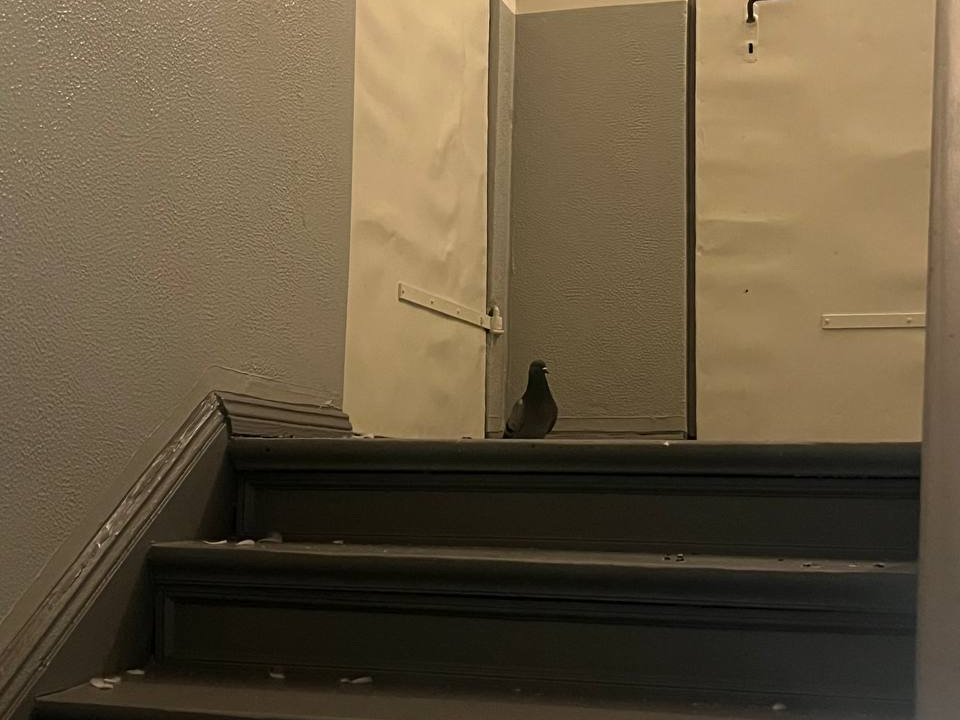
List of things that feel catastrophic Cold plunging Meeting the love of your life Christmas at home Pigeon living in the hallway Stepping outside after 4 pm Not being married Political speeches in the proximity of a Christmas tree NYE in Berlin Assemblies of 3 or more police vans Lack of social resilience |
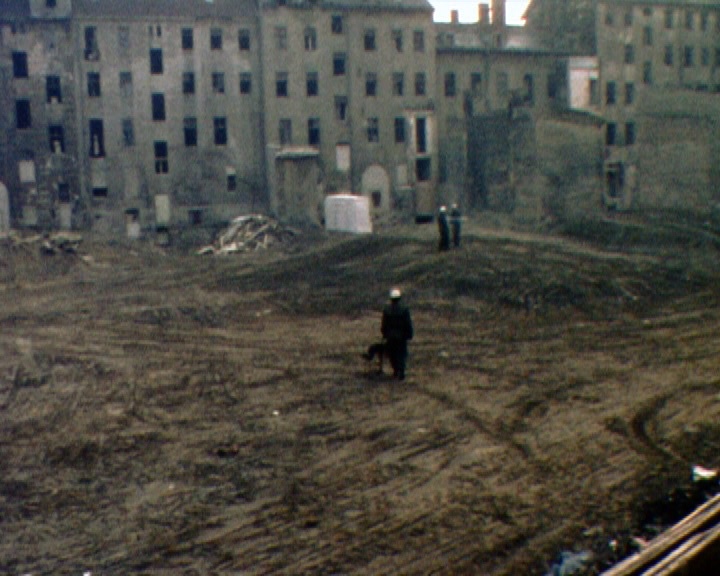
It’s the holiday season. I have wrapped, but I remain unprepared for what is to come in 2026. Berlin enjoyed an unusual amount of sun over the past couple of weeks—so unusual, in fact, that we immediately forgot it ever happened. The holiday season is supposedly peaceful in this city. This is true, because peace can be close to resignation and to a feeling of having nowhere else to go. It would be wrong to describe this state as magical, an adjective that might apply to other cities at this time of year. Berlin is, at best, the place of accumulated residues of all the efforts we have made in 2025. Notably, it is the residues, not the results.
Nobody here is particularly good at accounting and archiving. Most of the year’s activities vanish into vague memories called vibes. There may be images and documentation of glorious demonstrations, exhilarating conferences, and beautiful sunsets, but what are they really worth, when there is not sufficient light until April to take a proper look at them? For this reason, such paraphernalia are not especially popular around here. Instead, we pride ourselves on an attitude of intense bleakness that feels appropriate for a city in a country called Germany.
Alongside the holidays, it is also the season of taking stock. The balance sheet of 2025 shows little surplus. The CDU is still running the government, the police have once again demonstrated their capacity for escalation, and the summer was short. There is little to look forward to in 2026 considering the political realities.
In a podcast that shall remain undisclosed, Nick Cave talks about life and offers, if not advice, then some bits and pieces that add up to a posture with which life might be faced. Many of his concerns revolve around the impossible and grotesque looks of tight pants and ankle boots, but in moments of broader reflection he states, with great certainty, that not everything should be sacrificed to art and that it genuinely helps to look at the ocean from time to time. Nick Cave is the king of doom and the shepherd of solace. Having lost two of his children in the past ten years, he speaks with authority about the darker moments of existence. He also spent seven years of his life in Berlin.
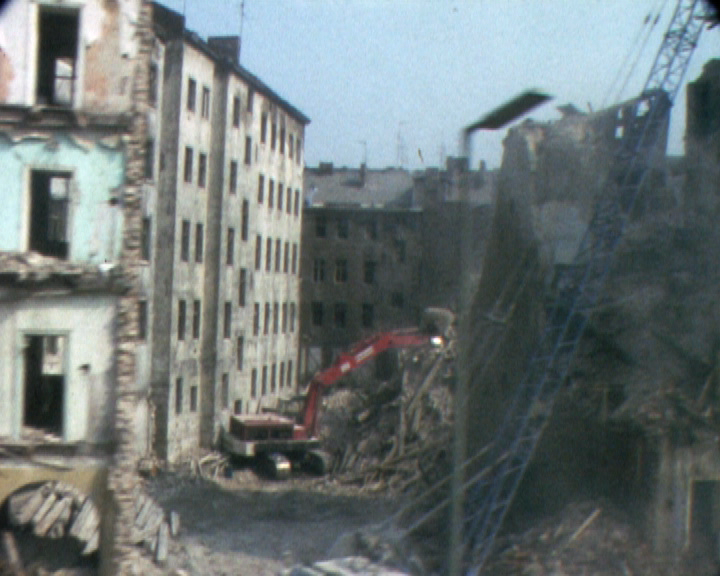
The end of the year comes with an inescapable sense of finishing what one never intended to even begin. I did not expect to meet all the deadlines, but I did—and that is shocking. What is there to do when the light is gone, the work is done, and nobody cares to invest in some coziness because this is not what you came to this city for? What becomes of defiant moods when everyone who might feel even remotely offended by them has left town for vacation? What was broken this year will not be repaired, and those who do not leave will remain to co-exist with the rubble. This is the scenario, yet it can be experienced less as a cruel fate than as a purifying joy. Around Christmas, Berlin appears in what might be its true nature. No sports events blocking the streets and, most importantly, no neurotic summer happiness distracting us from the fact that here is where pain easily finds its place.
“The last time you came around here / it was to rescue me,” sings Nick about his wife Susie Cave. In his account, the catastrophic feelings that life brings are clearly shaped by the death of his son Arthur at the age of 15, but they also include the experience of meeting Susie and his morning ritual of swimming in a cold lake. For some people, catastrophic feelings might be what give the world the edge necessary to know where and how to move at all. They contour to reality and point toward it. These feelings certainly pull you out of whatever briefly seemed to be an overwhelming problem, for better or worse. To learn to recognize and feel them distinctly, a Berlin winter at the end of 2025 might be an ideal training ground.
Nothing here is as it should be. Yet given the direction in which things are currently moving, a general shift seems more unimaginable than ever. Indeed, it would require serious magic to turn things around. It would require a catastrophe, a straightforward apocalypse. But wait—isn’t at least one of those already happening?
Paul Klee’s Angelus Novus was on display in Berlin this year. Many were surprised by how small the work is—and pleased by how cute the angel looks. Yet the presence of the little angel in the city left no trace of heightened awareness of the situation to which, according to Walter Benjamin in his last work, “On the Concept of History,” it inevitably points:
“There is a picture by Klee called Angelus Novus. It shows an angel who seems about to move away from something he stares at. His eyes are wide, his mouth is open, his wings are spread. This is how the angel of history must look. His face is turned toward the past. Where a chain of events appears before us, he sees one single catastrophe, which keeps piling wreckage upon wreckage and hurls it at his feet. The angel would like to stay, awaken the dead, and make whole what has been smashed. But a storm is blowing from Paradise and has got caught in his wings; it is so strong that the angel can no longer close them. This storm drives him irresistibly into the future, to which his back is turned, while the pile of debris before him grows toward the sky. What we call progress is this storm.” (Benjamin, Selected Works, Vol. 4, 392)
Benjamin and Cave make a joint appearance in Wim Wenders Wings of Desire. While parts of “On the Concept of History” are being recited as the current reading of one of the visitors to the Staatsbibliothek at Potsdamer Platz—a place where the angels of the movie frequently linger to listen to people’s thoughts—Nick Cave and the Bad Seeds play their song “From Her to Eternity” in one of the scenes. The current catastrophe may no longer be difficult to name, but it remains difficult to feel. Despite Klee’s angel’s appearence in town, and despite all the words, demonstrations, and events that enter some archive, progress seems unimpressed by these rescue attempts that seek to disrupt it.
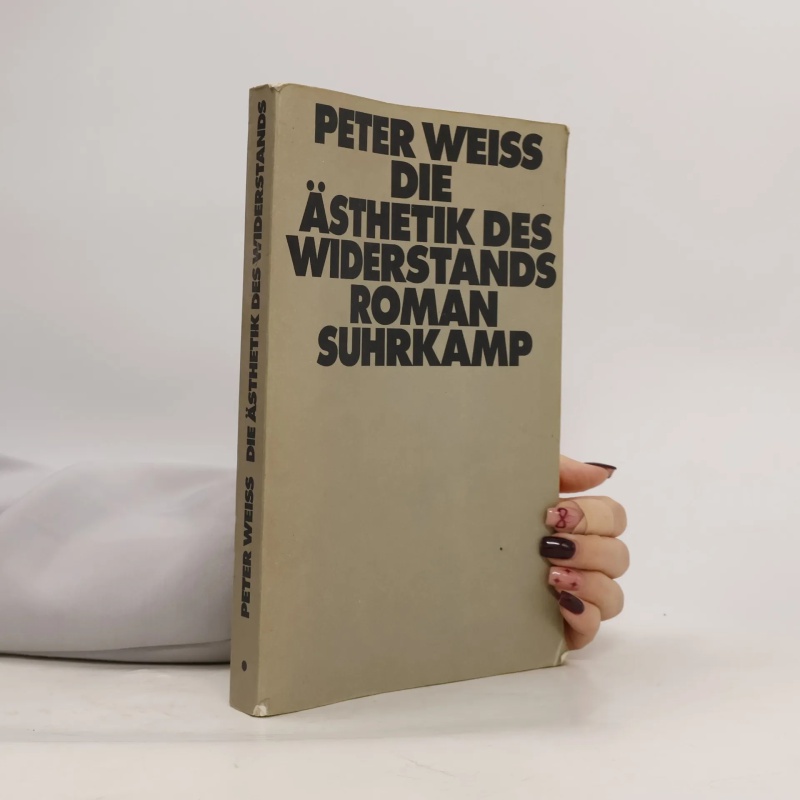
In response to the ruthlessness of this progress, Benjamin offers us what he calls a “weak messianic power” (Benjamin, Selected Works, Vol. 4, 390). What this power consists of has been the object of scholarly and political debates since the theses were published in 1942. What matters is that this power is weak: hard to detect, not a principled hope that is always available, but a dynamic force of continuation that must adapt to historical circumstances. Just before the ultimate catastrophe of their final defeat in Peter Weiss’s Aesthetics of Resistance, members of the International Brigades in the Spanish Civil War observe that not believing in the possibility of victory over fascism, even in a moment of utter hopelessness, would be a form self-betrayal:
“After the breakthrough to Villalbia and Gandesa, the lines had been stabilized, which showed that we still had reserves of energy, and we clung to the notion that the great unified front against fascism would materialize at the very last moment. Viewing this as self-delusion would have been tantamount to betraying our principles.” (Peter Weiss, The Aesthetics of Resistance, Vol. 1, 269)
Given how events unfolded for them, the messianic power proved to be very weak indeed. One might even question whether it is a power at all. Still, there is solace in the way Peter Weiss portrays the unifying force of political conviction and how it finds purpose in the moment of disaster. A good thing, perhaps, that we live on a training ground of catastrophic feelings as we prepare for 2026.
***
Henrike Kohpeiß is a philosopher in Berlin, working on social and political philosophy, critical theory, affect studies, Black studies and feminist philosophy. Her first book Bürgerliche Kälte was published in German in 2023 by Campus Verlag. The English translation, Bourgeois Coldness, came out this year through Divided Publishing.
Support us by buying our books.