A Work of Hysterical Fiction
An Interview with Edwin Nasr about his forthcoming debut novel Fear Eats Ali
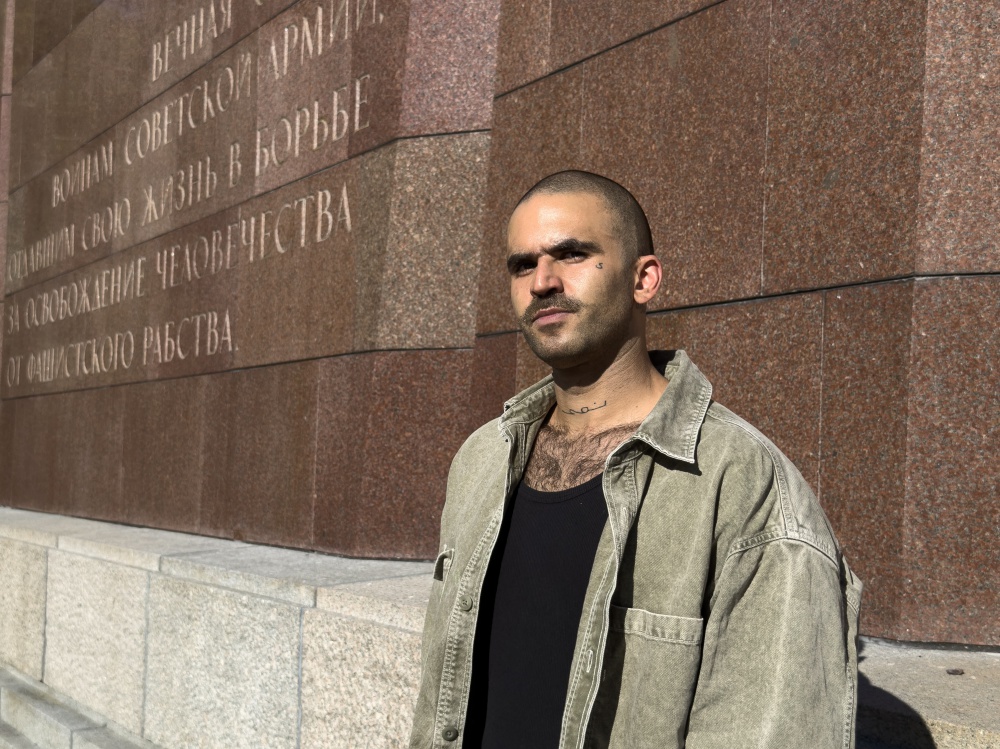
This fall, Wirklichkeit Books is publishing Fear Eats Ali, a book by the Lebanon-born and Berlin-based author and curator Edwin Nasr. This is exciting for two reasons: It is the first novel in the program, and it will be co-published with Wendy’s Subway, a press in Brooklyn, New York, run by good friends and known for its experimental and urgent books by emerging artists and writers. Fear Eats Ali, a work of “hysterical fiction,” as Nasr puts it, was written over the past three years in Berlin. In this conversation the author reflects on the relation between the novel and the context of its genesis, its literary inspirations, and the possibilities of fiction when history moves fast. A German translation of the book—Angst essen Ali auf—by Lotta Thiessen is forthcoming alongside the original work.
***
Wirklichkeit Books (WB): Introduce us to Ali, the main character in your debut novel Fear Eats Ali.
Edwin Nasr (EN): Ali is a Frankensteinian construction, stitched together from the lived experiences, dream residues, borrowed memories, overheard confessions, and existential meanderings of people both real and imagined. He is a Catholic, homosexual immigrant from southern Lebanon who arrived in Berlin more than a decade ago to study engineering. He has remained there long enough for the city to become a refuge but also a trap. Ali is deeply risk-averse and often selfish in ways that are mundane rather than monstrous. He likes dissociating on downers and bottoming for losers, and has long abandoned any pretenses at cracking out a space for himself within a political formation. His relationship to the political is in fact quite ambivalent: He dismisses it as an intrusion when it threatens his fragile sense of security, and turns toward it when it offers direction and the illusion of righteousness. His father, Karim, fought with the Lebanese National Resistance Front against the Israeli occupation in the 1980s, but abandoned his comrades in the middle of an ambush. Which is to say that cowardice runs in Ali’s veins, and that he is, for the first time in his life, having to contend with the churning of the death machine, whose gears make no distinction between those who seek history out and those who actively try to evade it. When the novel begins, he is facing deportation after allegedly assaulting a police officer during a Palestine solidarity demonstration.
WB: How does Ali deal with the news of the deportation?
EN: What interested me while writing the novel was resisting the temptation to make this the story of an awakening or a redemption. Ali does not suddenly become courageous or principled; if anything, the deportation notice ends up magnifying his contradictions. He continues vacillating between self-preservation and responsibility, paranoia and lucidity. But it is precisely through those contradictions that he begins to grasp that cowardice is not simply an individual failing but also a condition produced by the world he inhabits. He is compelled to somehow finally confront the political and psychic inheritances he has spent years trying to outrun.
WB: When we first started discussing the idea of your book three years ago, you were still planning to write a non-fiction essay. How did you end up writing a novel?
EN: You’re right, this was supposed to be a very different book. When we first began talking about it, you were starting to plan a series of short books with Lama El-Khatib devoted to the histories and afterlives of Marxist thought and praxis. For this series—which remains unrealized to this day!—I intended to contribute an essay on the Lebanese Left's grapplings with the ascendancy of political Islam within anti-imperialist struggle after the collapse of the Soviet Union. I was interested in asking how communist militants and intellectuals understood the gradual erosion of their political horizon and how they navigated the shrinking of their sphere of influence; more importantly, I wanted to analyze how they came to formulate their positions vis-a-vis Hezbollah and armed resistance. Suffice it to say that many of the paradoxes that continue to define the region can be traced back to that historical conjuncture.
The project became impossible almost overnight with the unfolding of the October 7 events and the Israeli regime’s campaign of genocidal extermination in Gaza, and later in southern Lebanon. History had begun moving again with such speed and violence that any attempt to pause or arrest it in the form of an essay would have always already felt obsolete or, God forbid, irresponsible. I am in admiration of those who have managed to push against the tides of unpredictability and feelings of insignificance and smallness in the face of catastrophe, but I can’t say that this is something I could ever apply to myself. And this is ultimately why I turned to fiction. It allowed me to favor proximity and fabulation and to remain with the intimate ways in which history can impress itself upon ordinary lives, individual desires, and family histories. The novel form became, paradoxically, the more modest and therefore the more honest form.
WB: I remember quite early on you brought up Etel Adnan’s Sitt Marie Rose as a reference for your own writing. What is it about that book that inspires you, and what other literary works have been important in the process of writing Fear Eats Ali?
EN: I returned to Etel Adnan’s Sitt Marie Rose again and again because it so brilliantly understands that, in moments of world-historical rupture, there are psychic and moral convulsions that emerge which require tending to, lest we prefer to allow vengeful ghosts to haunt us to our graves. Adnan’s novel is brief and compressed to the point of suffocation, and yet it contains an entire world of impossible choices—it leaves you nauseous and enraged. Sitt Marie Rose taught me that a novel might remain clear-headed in speaking through a certain historical position, a set of immutable ethical and political imperatives, all the while holding onto contradiction and ambiguity.
Another book that accompanied me through the writing process was Marguerite Yourcenar’s Alexis, or, The Treatise of Vain Struggle because of the way it deals with the confessional as a kind of concealment, rather than an exploration of inner truth. Her protagonist is constantly wavering between crude honesty and unmistakable self-deception. It’s unnerving and at times unbearable, and that tension was crucial for thinking about Ali.
I’m also indebted to Christa Wolf’s City of Angels, which is such a masterful meditation on political failure and the impossibility of clean historical reckoning; Sonallah Ibrahim’s That Smell, for its radical conciseness and its ability to narrate alienation in both dynamic and claustrophobic terms; Pierre Guyotat’s Tomb for 500,000 Soldiers, obviously, for teaching us how delirium and excess can exorcise us from the fascist inside all of us; and Houria Bouteldja’s Whites, Jews, and Us, which I believe is single-handedly the most powerful political treatise to come out of Europe in a long time.
WB: You have lived in Berlin since 2023, which is both the place where the novel is set and where you wrote the majority of it. How did the specifics of this context inform your writing?
EN: Let me try to answer this question with this suggestion. Read Fear Eats Ali as a work of “hysterical” fiction, because this is what writing it often felt like: a torrent of distortions that attempted both to oversaturate and to illuminate a situation that was, beneath the narrative excesses, all too real. This has, of course, a lot to do with the time and place in which this book is written; the hysterical register was a way to mirror, and maybe even metabolize, the atmosphere that had seized Berlin in the aftermath of October 7. I experienced Berlin as giving in to a sort of prolonged episode of mass psychosis: German public discourse seemed to untether itself from reality, the language of politics felt forcibly conscripted into the work of denial and deception, while the actuality of the Palestinian struggle was submerged beneath a flood of racist moral panics. There were entire communities, Palestinians above all but also Arabs and Muslims more broadly, getting stripped of the authority to speak for and bear witness to an unbearable crime, to God himself getting dismembered before their own eyes, denied their political agency and right to mourn, condemn, organize, resist. Everyday life in Berlin was reorganized around suspicion and paranoia, and surveillance took on such a participatory dimension that you would catch yourself spending most of your time wondering which colleague or neighbor might report you to an employer or the police.
All of this obviously informed Fear Eats Ali, and I believe it could only have emerged from the rotten particularity of this moment, which is far from over. I wanted to write about what it means to inhabit a society that persistently demands your complicity in forms of obvious unreality, where language functions to estrange you from the matter-of-factness of a genocide eating away at everything you’ve ever come to know. Ali's fear is therefore never reducible to the possibility of deportation alone; it is also about the fear of losing one’s ability to trust and act on one’s own perceptions, of watching every available moral and political category get gleefully pissed on, of losing one’s sanity and of turning into the Devil.
Edwin Nasr was born in 1994 in Haret Sakher, Lebanon. He lives and works in Berlin, Germany. His writings on politics and contemporary art have been published in Bidoun, n+1, Afterall Journal, The Funambulist, Mousse Magazine, and Mada Masr, among others. He is the Senior Editor of Palestine is everywhere (TBA21, Silver Press and the87press, 2025) and translates from French to English for different publications.
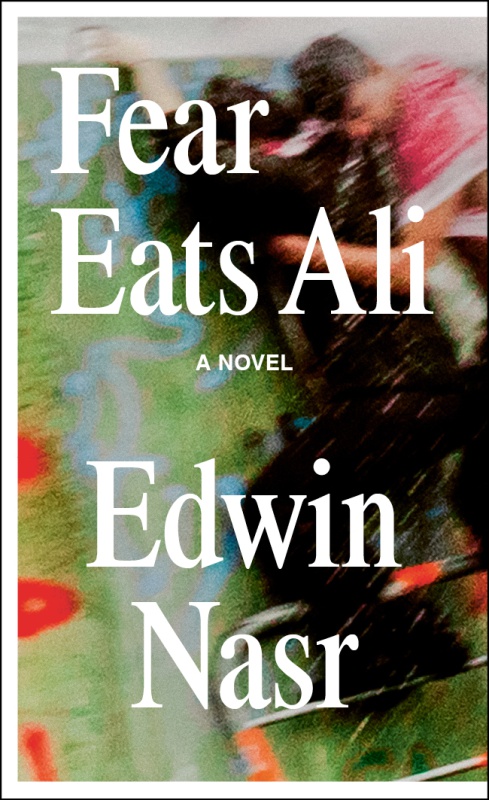
Co-published with Wendy's Subway.
A German translation of the book—Angst essen Ali auf—by Lotta Thiessen is forthcoming alongside the original work.
ISBN EN 978-3-948200-22-0
ISBN DE 978-3-948200-26-8
176pages, 18€
Pre-order your English copy here.
Pre-order your German copy here.